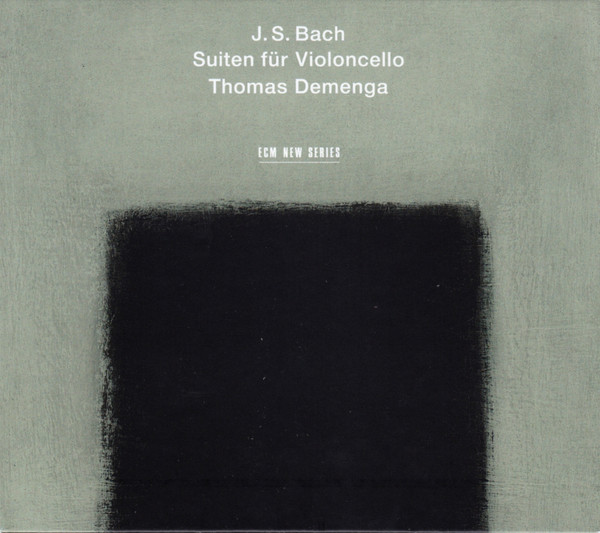
Thomas Demenga: Bach Cello Suites
ECM New Series 2530/31 (CD & digital)
Recorded: February 2014 at Hans Huber-Saal, Basel
Released: October 2017
For this project, Demenga plays the first five suites on a Testore cello. He switches to a four-string 1669 Soyer Andrea Guarneri for the sixth. He uses a modern baroque-style bow and gut strings, tuning a full tone below standard A=440.
For more background, see this interview with Strings Magazine and a detailed conversation with Tim Janof. Both pieces are worth a read, especially if you’re interested in performance insight or play the cello yourself.
Demenga was born in Switzerland and studied with some of the finest cellists around—Antonio Janigro, Leonard Rose, and even Rostropovich. He attended Juilliard in New York. He has recorded these Suites before, between 1986 and 2002, but always paired each one with contemporary solo cello works. Though he’s long been renowned for his take on modern music and improvisation, lately he’s put more energy into the baroque side of things. His discography is actually pretty bare when it comes to traditional cello warhorses. Consequently, this release feels notable.
The Recording
ECM is known primarily for high-minded jazz and super-clean audio, and this Bach set is no exception. I listened to it in hi-res (24-bit/96kHz) via Tidal, and found the clarity and richness impressive. Contrary to what’s mentioned in that first interview, I didn’t notice any sonic flaws like passing trams!
The cello isn’t aggressively close-mic’d, so we don’t get intrusive bow or finger sounds. There’s plenty of space in the sound, enough ambience to feel present but not swamped in echo. The lower tuning, as Demenga discusses in interviews, gives the cello a sonorous, glowing quality. This really fits with his relaxed style. The notes don’t feel forced, nor do they stand out awkwardly. Although there are the raspy, upper harmonic flavours from gut strings, it’s not nearly as pronounced as one finds in some “historically informed” recordings.
The Music
To my ear, this isn’t a textbook “historically informed”(HI) recording, and that’s not a criticism. The gut strings, low tuning, and baroque bow help shape the sound, but Demenga’s style still has traces of modern romantic playing—just with a much lighter and gentler approach. There’s more legato than most pure HI interpretations. Yet, he also uses ornamentation thoughtfully, adding the baroque flavour without sacrificing the flow or momentum of the music. His articulation isn’t quite as sharply defined as the HI purists. Where musicians like Lucia Swarts shape every musical line with strong phrasing, Demenga’s dynamics often stretch more broadly across whole passages.
No performance is ever purely one thing, and Demenga’s approach sits somewhere between HI and romantic. Imagine a spectrum from strict historical practice to full-blooded romantic expressiveness. Demenga’s recording probably lands a third of the way from the HI side.
Contrasts.
Coming off Anastasia Kobekina’s recent release, the contrast is clear. Both artists lean toward baroque technique. However, Kobekina pulls your attention to detail and thought, while Demenga just lets you soak in the sound and emotion. The time seems to fly—you blink and a whole suite has ended. It’s not an especially detailed approach, but the playing is quick without ever feeling rushed (aside from my only real exception: the third suite’s Prelude felt just a little fast). The overall effect is hugely enjoyable. This is music you can feel, not just analyse.
Rather than dissect every movement, I’ll just mention a few highlights. The fourth suite’s Prelude, for instance, really nails the pacing and weightiness, giving just enough emphasis where it counts. The Sarabandes across the set are particularly lovely. They are flowing, not stodgy or heavy-handed.
Demenga’s stated focus on the “French dance” character of the suites comes through. It’s almost impossible to sit still while listening. The artist manages to hit that almost mystical sweet spot which gives so many of us pleasure and the urge to move with the music even if only to tap ones feet!
In the linked interviews above Demenga mentions that the recordings were live. In the studio, if he was not satisfied with a section, he re recorded the whole movement in preference to editing the recording. This often works for popular music where an artist or group want to preserve the excitement and impact of their sound. I would suggest it works well here. Clearly Demenga’s technical abilities are up to this!
In Summary
I came to this recording via a suggestion from my brother who also plays the cello. In retirement he has restarted lessons and was recommended this recording by his teacher who in turn was taught by Demenga. I’d rate it among the best Bach suites recordings out there. I would recommend it without hesitation to anyone who wants an emotionally rewarding listen without having to overthink. This is Bach for pleasure—not stress—and it more than delivers.
Charles.